1 in 3 Pre-K Teachers Uses Generative AI at School
Despite concerns about screen time, more preschool teachers are using artificial intelligence products in their classrooms, according to a new report.
January 5, 2026
Sunny studio/Shutterstock
Preschool teachers use generative artificial intelligence the least out of educators in grades pre-K-12, but they are starting to use it more despite lack of guidance, according to a new report.
According to research from nonprofit think tank RAND, 29 percent of preschool teachers use generative artificial intelligence in the classroom, though 20 percent of those teachers use it less than once a week. Comparatively, 69 percent of high school teachers use generative AI, with 64 percent of middle school teachers and 42 percent of elementary school teachers using the technology.
“To me it raises the question of how AI use is going to evolve in pre-K,” Jordy Berne, an associate economist at RAND and co-lead on this study, said during a press briefing. “Are we going to learn more about developmental impacts that will prevent it from becoming more common? Or will we find ways to use it really productively, and it’ll be a great boost to teachers and pre-K students?”
A significant factor is a worry that for the youngest students, technology, particularly personal devices like iPads, could detract from their developing communication and social skills.
“One of the key concerns is developmentally appropriateness,” Berne says. “Teachers expressed concerns about children having too much screen time, which can detract from human interaction they deem necessary for social skills.”
Plugged In
But pre-K teachers are plenty plugged in.
In addition to asking about AI, the RAND research, called “the spring 2025 American Public School Pre-K Teacher Survey,” also asked pre-K teachers about their use of instructional, curricular and administrative edtech products and services. The survey polled roughly 2,000 pre-K teachers working in public schools.
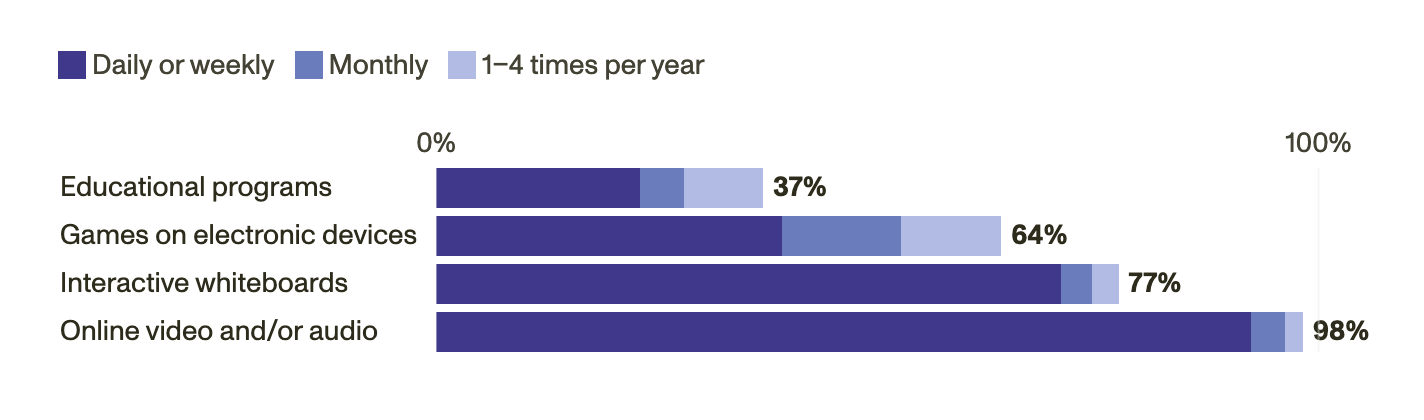
Almost all of those surveyed — 98 percent — use online video or audio with their students, with 92 percent using it daily or weekly. Many teachers reported using videos or music for their students to give breaks for the students in between lessons and dance time.
Interactive whiteboards were among the top edtech tools used with students, at 77 percent. The teachers reported using them because they are visually stimulating and tactile, while researchers estimate use is high because teachers are familiar with the tools, since they have been around for more than a decade. The researchers added in their report that the whiteboards are typically used in large-group settings, helping with socialization, versus games on devices that are individual-focused.
NEWSLETTERS
STAY AHEAD IN EDUCATION.
Sign up for EdSurge newsletters for timely news, insights and analysis.
Electronic device-enabled games were also used among more than half (64 percent) of pre-K classrooms, while 37 percent reported using digital educational programs. While that had the lowest usage among teachers, the report said those using educational programs found them very helpful, particularly with students learning English as a second language and children with disabilities.
Ways Pre-K Teachers Use Edtech in the Classroom
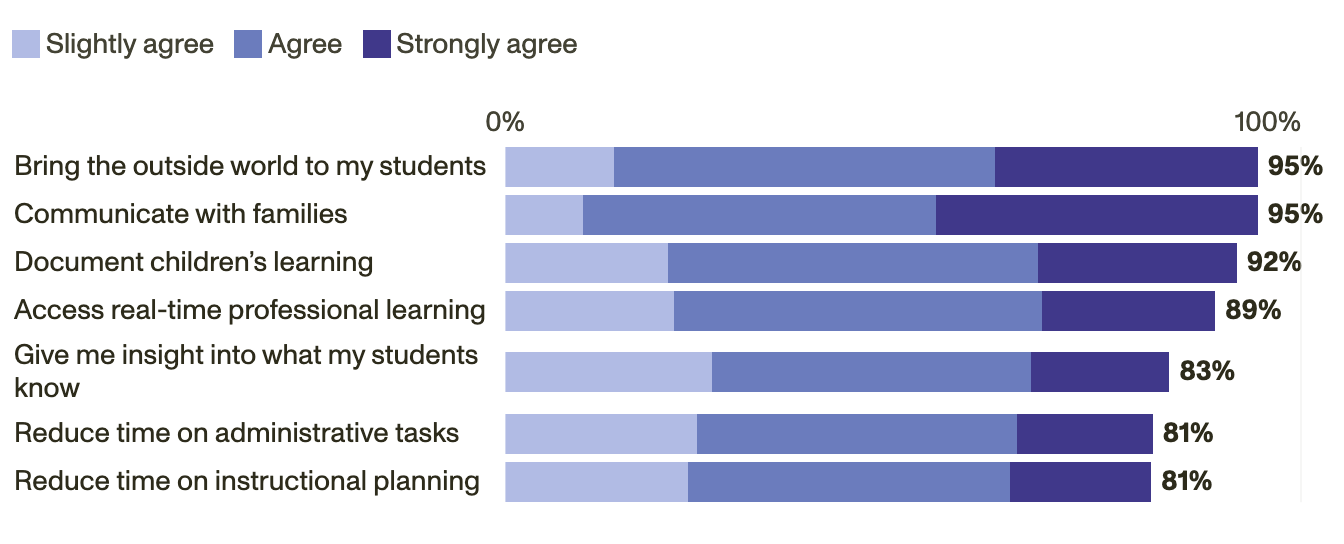
And for administrative edtech products, the majority of teachers surveyed — 82 percent — use platforms for family communication, with 75 percent using these tools daily or at least weekly. Most teachers (84 percent) agreed edtech could be particularly helpful in communicating with families.
Roughly the same amount (83 percent) used online and digital curriculum resources, though less than half (48 percent) used them daily or weekly. Over half also used assessment platforms and learning management systems (60 percent and 56 percent, respectively).
A majority say it could be helpful for bringing the “outside world” to their students, such as going on virtual field trips. There was also an optimism in sharing resources with other teachers through digital platforms, to stop them from “reinventing the wheel,” according to one teacher.
Ways Pre-K Teachers Think Edtech Is Helpful
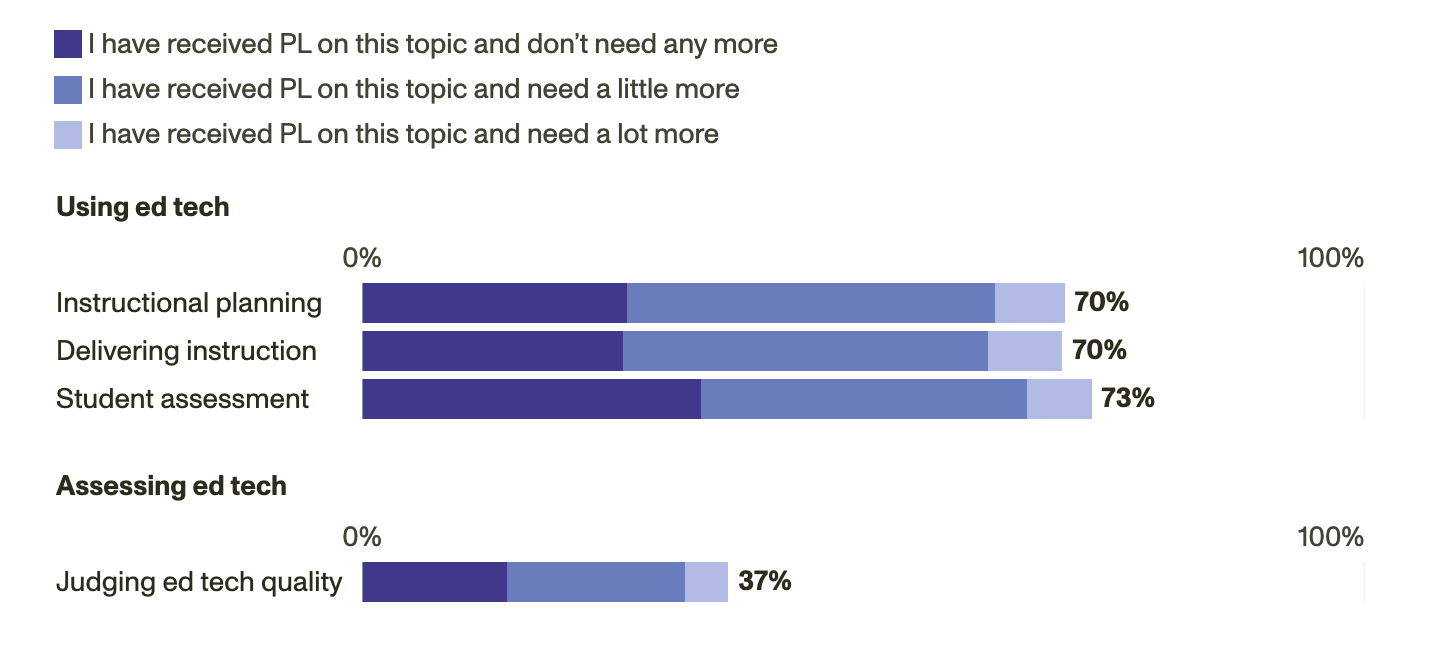
One of the largest concerns from the RAND researchers was the “critical gap” between familiarity with educational technology products and how to actually assess those products. While 7 out of 10 preschool teachers reported receiving professional training about using edtech, less than 4 in 10 received professional training on assessing the quality of edtech products.
Share of Pre-K Teachers Who Received Edtech Training
“Especially as AI is evolving and the entire edtech landscape is evolving, it’s making it harder for teachers to know what is high and low quality,” Berne says. “So this is probably more important than ever.”
Lauren Coffey (@Lauren__Coffey) is a reporter at EdSurge covering early childhood education and technology at the K-12 level.
Popular on EdSurge
News
Hundreds of Thousands of Eligible Kids Are Waiting for Childcare Assistance
Moriah Balingit and Lauren CoffeyNews
A Principal and a Student Reviewed the New ChatGPT for Teens. They Had Plenty to Say
David WeldonRead Next


News
EdSurge Podcast
Assignments, Invoices, and the AI Fix
Voices of Change
Artificial Intelligence




News
EdSurge Podcast
Two Students, Two Questions They Wouldn’t Let Go

Voices of Change
Artificial Intelligence