What Happens When AI Suggests Minecraft for a Lesson on Circles?
New research on AI-powered personalized learning shows why teacher judgment is crucial when chatbots miss the mark.
By Mi Aniefuna
November 17, 2026
Credit: Pixel-Shot / Shutterstock
What happens when a teacher asks an artificial intelligence (AI) chatbot to bring excitement to a geometry lesson on circles and it recommends a lesson on squares instead? It sounds like the AI tool was hallucinating, which is exactly what happened recently when researchers were studying how teachers can use AI for personalized learning.
The AI suggested Minecraft for a lesson on circles, radius and diameter. Minecraft is, indeed, a popular game among students today, so it might have been an exciting addition to a lesson. While the game of squares would be perfect for teaching arrays and fractions, its blocky world features no true circles (though players can craft some circular objects such as compasses and build pixel-art circles).
It’s a common limitation of using AI to personalize lessons, according to Southern Methodist University education professor Candace Walkington. In a recent study in the journal Educational Technology Research and Development, Walkington and colleagues examined how AI performs when educators take what they call a “teacher-in-the-loop” approach.That’s where teachers work with AI to adapt instructional materials but maintain control over what makes it into their lessons.
The researchers explored whether the “teacher-in-the-loop” approach could help teachers more efficiently incorporate popular culture examples and references that appeal to students’ interests into existing math problems. In some instances, teachers leaned on AI to fill their own knowledge gaps of youth culture. For example, they prompted ChatGPT to name popular Twitch streamers and to clarify whether kids still like to eat Takis (they do).
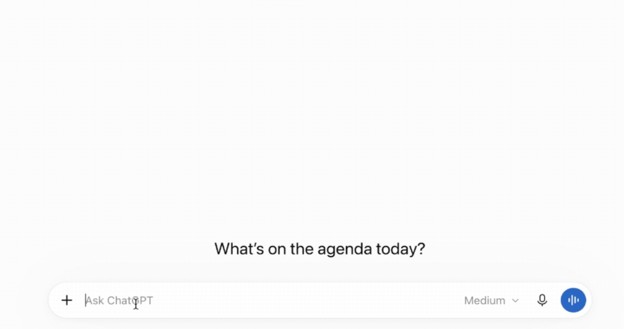
Prompt to ChatGPT: “Do kids today like takis snacks?” For illustrative purposes only.
Broad Strokes vs. Specific Interests
In the study, seven middle school mathematics teachers who taught a combined 521 students used ChatGPT to personalize math problems. But the results didn’t always connect with their students the way the teachers hoped. They realized that a math problem about video games may sound engaging to students, but the students wanted personalized references to a particular game or character that resonated even more with them. The study suggests tha
t AI can assist teachers with making lessons more relatable, but the teachers’ professional discretion, insight and personal relationships with students are paramount.
Walkington says the study pushed her team to look more closely at co-designing custom generative AI models with students. Those models could offer insight into specific popular culture references that “aren’t cringe,” Walkington says.
The study follows more than a decade of research substantiating personalized learning as a salient instructional tool. Over the past decade, EdSurge has covered personalized learning extensively. This iteration of a technological revolution, driven by the unrestricted scale of AI, is a slight left turn, but not unfamiliar.
The National Center for Education Statistics’ (NCES) School Pulse Panel, published in June 2025, found that 40% to 46% of public school leaders across all grade levels report having at least a few teachers who use AI to create tailored instructional materials.
Teachers Are Already Experimenting
Echoing Walkington’s findings, the NCES survey found that 70% of school leaders surveyed believe that AI can help teachers better connect with today’s students and their learning needs. These pop culture links help bridge the intergenerational knowledge gaps and speak the language of adolescents and teenagers.
In February 2026, KnowledgeWorks published findings from a working group of K-12 educators exploring how AI could support personalized learning. The educators identified six applications: assessment and feedback, data-informed decision-making, student engagement and relevance, student agency, instructional planning, and differentiation.
Teachers in the KnowledgeWorks report described using AI to connect lessons to students' interests, adapt materials for different learning needs and analyze student performance data. However, the group emphasized that effective implementation depends on established personalized learning practices, including designing for individual differences and giving students ownership of their learning. They also cautioned against treating efficiency as an end goal, suggesting that time saved through automation should be redirected toward responsive instruction and collaboration.
Where the Chatbot Falls Short
One caveat of using AI for personalizing learning is that while it can be a useful tool, there should be “balance to avoid distancing too far away from primary sources and curricular materials that have been vetted and are evidence-based,” Walkington cautions.
Walkington and colleagues’ research offers updated data after following this group of teachers since 2024 from professional development through two years of using AI in the classroom. They found that while the teachers in the study used AI to personalize instruction to appeal to students’ interests and needs, they spent additional time using their professional discretion to adapt the AI output.
Walkington says that the AI’s lack of context can produce inappropriate or inaccurate instructional advice, which is why her study places heavy emphasis on having a teacher in the loop. Teachers’ discretion is essential in assessing the AI’s output.
In the study, Walkington and colleagues describe the act of applying discretion as teachers’ “prompting moves,” an element that formed a significant part of their analysis.
Is the amount of time required for teachers to adapt AI’s output generally worth it? Walkington believes that the answer is nuanced and deserves attention. She tells EdSurge that it’s hard to prescribe a blanket conclusion from a binary cost-benefit analysis of using AI for personalized learning.
On one hand, teachers can cognitively offload repetitive tasks and quickly tap into the interests of students, even if AI is not a perfect stand-in for intergenerational connection. On the other hand, if the moves teachers must make to get usable output become arduous, Walkington says, they may need to scale back or stop using AI for this purpose.
That didn’t happen with the teachers in the study. The gains in their productivity, cognitive offloading and personalization outweighed the effort of adapting to new tools. As more research measures the efficiency of teachers’ AI use, whether or not we can generalize these findings will become more clear.
What is clear is that using AI to personalize lessons trades one kind of teacher time for another, and the teacher’s judgment is what makes it work.
Popular on EdSurge
Read Next

Opinion
Special Education



Voices of Change
Artificial Intelligence

Opinion
Artificial Intelligence