How Educators Can Practice “Futures Thinking”
Traditional strategic plans often fail in times of rapid change. Here is how a “futures thinking” mindset helps schools stay nimble and adapt to what’s next.
By Nina Berler
July 15, 2026
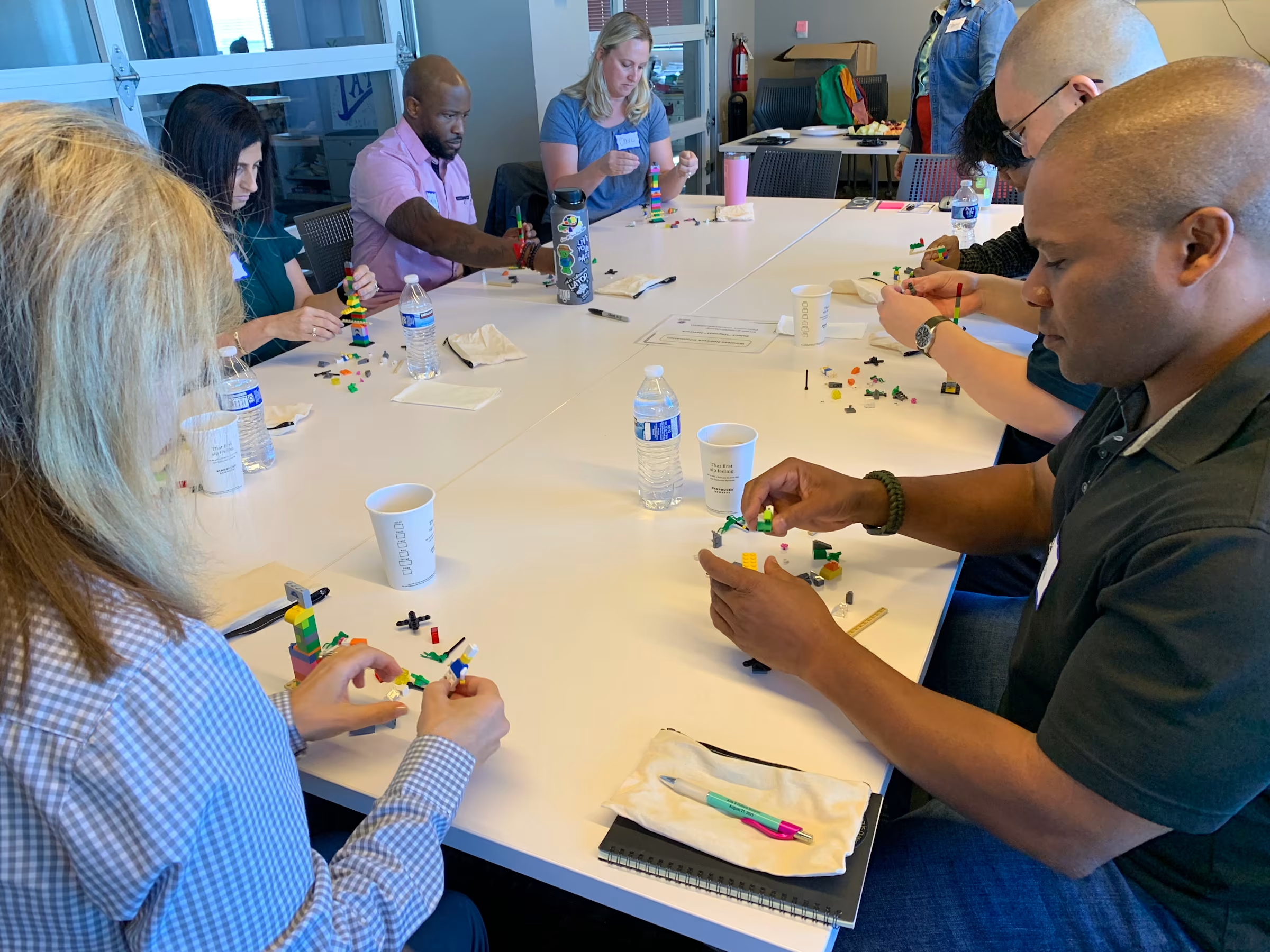
KnowledgeWorks facilitates a hands-on workshop for educators
Credit: KnowledgeWorks
Schools are navigating a steady stream of change, from new technologies to shifting expectations about what students need to know and be able to do. Yet anticipating change is different from knowing how to prepare for it.
A classroom teacher early in her career, Katie King has spent the last decade helping educators think about that challenge. Now senior director of strategic engagement at KnowledgeWorks, she works at what she describes as “the intentional intersection of futures thinking and education,” helping schools and systems consider possible futures and what those possibilities mean for decisions they make today.
EdSurge spoke with King about futures thinking, the forces shaping the next decade of education and how educators can turn long-term reflection into practical action.
EdSurge: What are the most significant forces shaping the future of learning right now, and how do they show up in your work with educators and systems?
King: The first is AI and integrating with AI, how the next generation of artificial intelligence, which is coming ever more rapidly, has the potential to change how humans think and feel, challenging our current notions of skill development and human relationships.
The second is disruption and its potential to upend daily life in school and learning environments. Our traditional approaches to managing our day-to-day lives and creating change in education really feel insufficient in the face of this very volatile environment.
The third driver is a lack of trust in public institutions: declining confidence, economic constraints and just more market-based competition in education. The good news is that most surveys show that people do have trust in their local schools and their teachers, so I think public education has an opportunity to leverage that by thinking creatively about who they can be in this community.
The fourth driver is the gap in education relevance. The education system faces this urgent need to integrate students’ emerging needs, concerns and aspirations into what they’re learning. The world that they’re living in today and going out into is different from the one schools are setting them up for.
When you talk about “futures thinking,” how is that different in practice from forecasting or strategic planning in education?
Futures thinking is a disciplined research and strategy practice: noticing change, examining assumptions, exploring possibilities and making future-informed decisions — building our mental muscles to avoid making predictions. In futures thinking, we’re actually saying, “We don’t know. Let’s explore a lot of possibilities and then use that range to make informed decisions.” I think when people build these skills and mindsets, they become more flexible and nimble, more attuned to change as it’s happening. I think it’s an avenue toward more proactive leadership than crisis response.

How do you think about forecasts in education, and what role are they meant to play for school and system leaders?
The purpose of a forecast is to synthesize research, trends and emerging issues affecting education. It’s meant to boil it down to some digestible ideas that leaders can then use. We do that by exploring forces that are already affecting education, from AI and workforce changes to shifting expectations of learners, and then how those changes could evolve and shift over time.
We’re hoping our publications [futures forecast and strategy guide] will help people step back from the day-to-day pressures, see the larger patterns shaping the future, and begin to think about how things might be different. What should that mean about what we’re doing today?
AI is one of the forces reshaping education. What does it reveal about how educators can plan in the face of uncertainty?
I think AI is the perfect topic to test how willing we are to avoid predicting the future and instead get comfortable with uncertainty and accept that there is a range of possibilities. We do not have any facts about the future; that is the core tenet. So, when we’re faced with that level of uncertainty about AI, what do we do? In our view, we can plot out as many possibilities and ideas as we can. Then we can decide what we want to do that’s most aligned with our vision.
A recurring challenge in your work seems to be moving from big-picture futures conversations to concrete decisions. What does it take to make that shift effectively in schools and districts?
Try not to resolve uncertainty by moving to strategy too quickly; sometimes a sense of urgency can backfire when we haven’t allowed for the possibilities, contradictions and questions. It can’t be, “Let’s have one big conversation about the future, set our five-year strategic plan and then be done.”
Make sure you have a vision for your school or district that’s more than words on the website. Once you’ve thought about the longer-term future and considered many possibilities, you can use that vision as a filter and revisit decisions as the landscape evolves.
We’re constantly saying: “What have we learned when we’re looking out for the future? And what does that mean for what we do today?”
How can schools balance immediate day-to-day priorities with longer-term futures work in meaningful ways?
We wanted our most recent publication to be concrete, so it focuses on three practical calls to action:
Remake your role by connecting leaders, educators and everyone in the system to their personal vision.
Turn down the noise by creating transparency and clarity so schools can focus on shared goals for young people.
Seed new systems by piloting new approaches and doing small experiments that can grow over time.
None of those are about changing everything at once. They focus on shifting what educators are already doing in ways that support longer-term transformation.
Recommended Resources
Portrait of a Leader, Second Edition
Laying the Foundations for Systems Change
Envisioning Educator Roles for Transformation
Charting a New Course for Education
Watch this video:
This article was sponsored by KnowledgeWorks and was produced by the Solutions Studio team.
Popular on EdSurge

KnowledgeWorks: Creating the future of learning, together.
https://knowledgeworks.org/
Read Next

Voices of Change
Artificial Intelligence
Protecting Student Cognition in the Age of AI




News
EdSurge Podcast