A New Classroom Use for Artificial Intelligence: Grade the Chat, Not Just the Answer
Two guests on “This Week with EdSurge” explain how AI can be used to assess when students think through their answers and when they talk with chatbots.
November 18, 2026
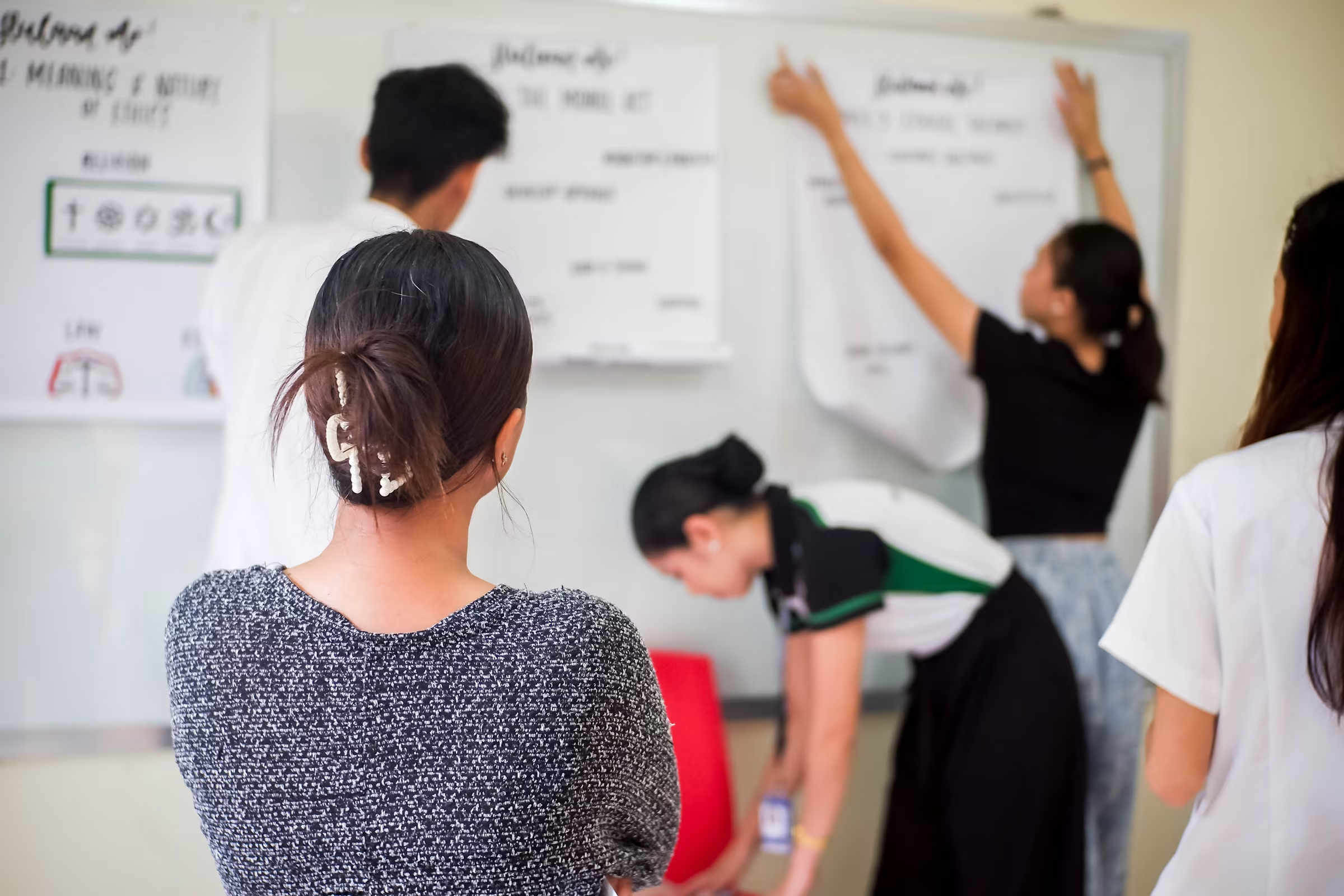
Credit: Ma. Czarita A. Aguja / Shutterstock
A right answer says little about how a student got there, and a teacher with a full classroom catches only a fraction of the reasoning behind it. Now some of that reasoning happens in a chat with an AI tutor, out of the teacher's view. In this episode, two guests look at how teachers can see more of it, one by getting feedback on what they notice and the other by reading what students type to AI.
Can AI Give Teachers Feedback on What They Notice?
Molly Fisher of Rowan University studies professional noticing: attending to what a student is doing, interpreting what it shows about their understanding, and deciding what to ask next. Her earlier research found that teachers can learn to notice, but the review comes slowly, usually only after a colleague observes a class or someone watches a recording. Starting in spring 2027, her team will test whether AI tools can speed that up.
The team will score teachers' written responses to classroom video first, then use that scoring to train the models, with a goal of sending each teacher a report within a day. Fisher calls it a fact-finding mission. She urges teachers to stay skeptical of AI output and to be careful about the student information they upload.
Should Teachers Grade the Chat?
Mike Kentz, who runs AI Friction Labs and has taught middle school, high school and college, starts with a study in which middle schoolers were offered an AI math tutor and most rarely used it. Kentz says a tutor that asks questions is harder than closing the tab or asking a chatbot for the answer, and that requiring it does not help if students never learn what good engagement looks like. His fix is to grade the chat itself.
He caps conversations at around ten messages to keep grading manageable, and builds criteria with students by comparing a strong chat with a poor one. He also asks students to reflect before and after, and has them explain a concept like tangent lines to a confused AI classmate. Kentz compares this moment to the early days of composition studies, when no one yet agreed on how to evaluate an essay.
Stories Mentioned in This Episode
Can AI Tell How Well Teachers Notice? Researchers Are Testing It by Shalini Kathuria Narang
Want Students to Think With AI? Raise the Stakes by Mike Kentz
This Week with EdSurge is a weekly podcast from EdSurge. Subscribe to the EdSurge newsletters for more news and analysis on education and technology.
Popular on EdSurge
Read Next





Voices of Change
Artificial Intelligence

Can AI Tell How Well Teachers Notice? Researchers Are Testing It.

Voices of Change
Artificial Intelligence

Opinion
Special Education