Returning to What it Means to Make School Human Again
After years of disruption and doubt, I’ve come to see that building compassionate schools depends on all of us.
April 22, 2026
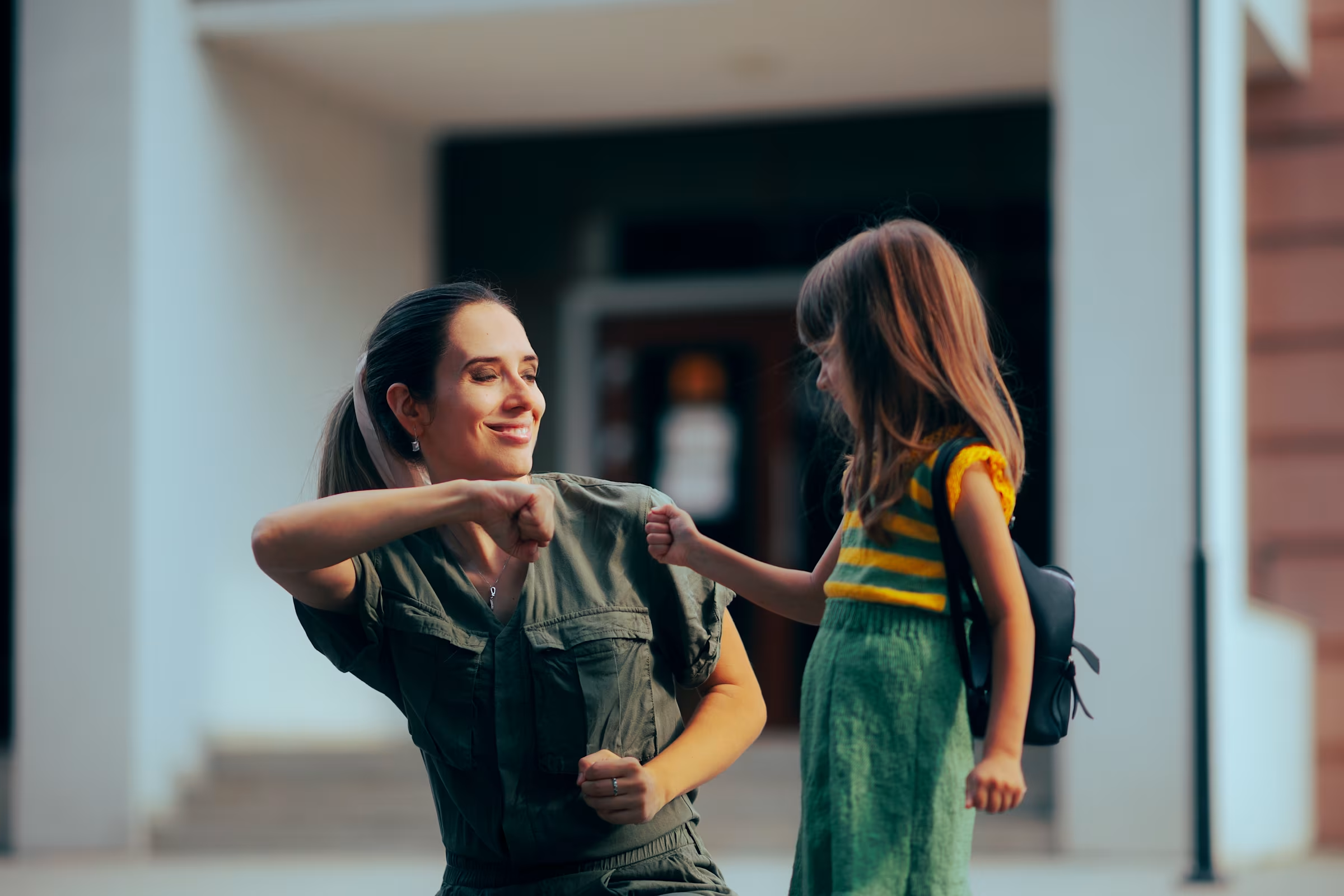
Nicoleta Ionescu / Shutterstock
This story is part of a series commemorating the five-year anniversary of the Voices of Change fellowship. Jennifer Yoo-Brannon, a Voices of Change fellow in 2021-22, is an instructional coach and professional learning leader in El Monte, California.
In 2021, I was a demoralized educator: not burnt out, but demoralized. As I shared in my first article for EdSurge, demoralization occurs when teachers “encounter consistent and pervasive challenges to enacting the values that motivate their work.”
That year, the pervasive challenges seemed obvious and communal. We were all navigating online platforms, figuring out how to replicate student services virtually and struggling to make up for lost time in instruction, social-skill development and relationship-building for when students returned to in-person schooling.
When I think about what feels most pressing now, it seems those challenges persist but are perhaps less obvious to society at large. As the authors of “Going the Distance: The Teaching Profession in a Post-COVID World (2024)” wrote:
A crisis is not merely an event: it’s the context in which an event takes place and the response to that event.” The global pandemic has ended, but how much has the context changed and did the response meet the needs?
Right now, I believe teaching is the most important thing we can do. When the world is on fire, what feels most pressing is teaching students to claim their humanity and helping educators understand how much the communal learning experience matters. Five years later, I have come full circle.
This time, I return to that same claim with a broader and deeper understanding of what makes a school. We use that old adage, “It takes a village…” More and more, I see that we, as school communities, are the village and the villagers that we need right now. What really makes a school more human is not just the principals and teachers, but the child welfare staff, paraeducators, campus supervisors, guidance counselors, cafeteria workers, coaches, librarians, custodians and secretaries. The list is long, but it feels necessary to name the people on campus who make students feel like they belong, support them and have their backs when students need it. These are the colleagues who have shown me what it is like to truly model humanity to our students.
The truth is that the onus is on all of us to create an environment in which mutual respect and empathy are the baseline expectations. So, as an instructional coach, as a leader and as a voice of change in this context, what can I do? How do I communicate to teachers that, while they have been beaten down and blamed for society’s ills, they also have the herculean task of helping students learn how to be human together?
In 2021, I said that I was demoralized. In 2026, I am revitalized and committed to my role as an educator, instructional coach and teacher advocate.
Since participating in the inaugural cohort of the Voices of Change fellowship, I have contributed essays to The California Educator, Edutopia and EdSurge. I have joined podcast panels to talk about social-emotional learning, culturally responsive teaching and civil discourse in the classroom.
This fellowship showed me the power of personal writing for representation and advocacy. I have started to write children's books about my own neurodivergent children. I have presented at local and state conferences and will continue to use my voice and my words to advocate for students, for educators, for quality professional development and schools that model the best of humanity. Writing for the Voices of Change fellowship has helped me claim my voice, my humanity and my power.
This story is part of an EdSurge series chronicling diverse educator experiences. These stories are made publicly available with support from the Chan Zuckerberg Initiative. EdSurge maintains editorial control over all content. (Read our ethics statement here.) This work is licensed under a CC BY-NC-ND 4.0.
Popular on EdSurge
Read Next

Voices of Change
Coding
How Coding Can Cultivate Deep Civic Engagement

Voices of Change
Artificial Intelligence
Why AI Made Me a Better Principal


News
EdSurge Podcast
Can Schools Trust AI Features in Edtech Products?
Voices of Change
Artificial Intelligence